
"Historical text"
100 article(s) found

The name of coffee bean is regular. The origin of coffee bean name is classified by manor name.
Professional coffee knowledge exchange more coffee bean information Please pay attention to the coffee workshop (Wechat official account cafe_style) when buying coffee beans, in addition to the name of the coffee origin in the packaging or text introduction, sometimes you will see the English and numbers, G1, G2, G3, AA, PB, SHB, SHG, HB, etc., have you ever wondered what these English or numbers represent? he
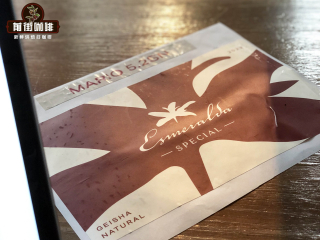
Rosa, geisha, Geisha or Gesha? Reveal the story of the past life and this life of Rosa coffee beans.
The incredible story of how some coffee seeds from southwestern Ethiopia entered Panama and then changed the entire coffee industry is well known but worth repeating. In the early 2000s, the Emerald Manor (HaciendaLaEsmeralda) was almost the same as the rest of the world.

Paris Metro and Cafe Culture, France
The subway culture in Paris is the place where the urban middle class is most concentrated, especially during the rush hour. Through the subway, which reflects the culture of the city, we can learn a lot about the city and culture. While working in Paris, I have to change lines three times a day to get to and from work, and take the subway back and forth for three hours, so I am impressed by the Paris subway.

A brief introduction to the origin, development, history and culture of Columbia Huilan boutique coffee beans with soft taste.
The pure taste of Colombian coffee, in addition to the natural environment with the most favorable conditions for coffee growth, is inseparable from the hard work of local growers. In Colombia, coffee cultivation has reached 1.07 million hectares, there are about 302000 coffee plantations in the country, and 30 to 40 per cent of the rural population depends directly on coffee production. There are many farms in Colombia, but

A brief introduction to the history and culture of the origin and development of fruit-flavored Colombian Huilan boutique coffee beans
Colombia's boutique bean producing areas are mainly in the south, with an elevation of more than 1500 meters, including San Augustin, Huila in Huilan Province, Popayan, Cauca in Cauca Province, Nari ñ o Province, and Tolima Province. The products of these places all have delicate sour and raspberry aromas, caramel aromas and sweet Colombian coffee.

A brief introduction to the Origin, Development, History and Culture of Colombian Huilan Fine Coffee beans with strong aroma
St. Augustine has a natural environment for the production of high-quality coffee, rich groundwater, fertile volcanic ash soil, suitable altitude, rich precipitation and suitable sunshine, etc., which is a very favorable environment for the production of the highest quality coffee. The brand of coffee in Huilan area is Huila, although it is easy to be confused, but if you know it is St. Augustine coffee in Huilan area,

Starbucks put cold coffee and white peaches in zongzi?
Professional barista communication, please follow the coffee workshop (Wechat official account cafe_style) is looking forward to the evaluation of zongzi? I'm working on it! After all, our love for zongzi is full (to be honest)! Let's start with a wonderful prelude to zongzi. On May 11, Starbucks began to sell iced rice dumplings, and there are two well-designed bags to choose from, one on the left.

A brief introduction to the History and Culture of the Origin and Development of Columbia Huilan Fine Coffee beans with heavy texture
Colombia huila, Colombia: located in the southwest of Colombia, it is one of the major coffee growing areas. Because there are famous coffee cultivation places in Huilan area, the names of small areas become brand names and circulate. Although the cultivation conditions in this area are also very good, the cultivation infrastructure of coffee cultivation farm and surrounding conditions is not yet.

A brief introduction to the origin, development, history and culture of caramel-scented coffee beans in Lindong, Sumatra.
La Suna Sumatra Lintong Rasuna Linton Mantenin coffee beans in Sumatra are different in flavor from ordinary Mantenin coffee beans in that they have a transparent and delicate taste, while the common herbs and earthy flavors of general Mantenin coffee beans are less obvious on this coffee bean. Lasuna Sumatra Lintong Rasuna Sumatra Lindon Manning Coffee Bean Cup test data are as follows:

A brief introduction to the Origin, Development, History and Culture of Lindong Fine Coffee beans in Sumatra
There is another kind of Arabica coffee called Lin Dong in northern Jiangsu, Indonesia. Now it is sold as a single coffee, but it was also called Manning more than a decade ago. Among the many small producing areas in northern Jiangsu, Uncle Doushu likes Yazaki best. The volcanic soil enriches Yazaki's Mantenin on the basis of syrup flavor. Because of its fiery and rich taste and lasting aftertaste, Uncle Dou gave it a Chinese character.

A brief introduction to the History and Culture of the Origin and Development of Lindong Fine Coffee beans in Sumatra
La Suna Sumatra Lintong Rasuna Linton Mantenin coffee beans in Sumatra are different in flavor from ordinary Mantenin coffee beans in that they have a transparent and delicate taste, while the common herbs and earthy flavors of general Mantenin coffee beans are less obvious on this coffee bean. Lasuna Sumatra Lintong Rasuna Sumatra Lindon Manning Coffee Bean Cup test data are as follows:

A brief introduction to the history and culture of the origin and development of fine coffee beans in Cliff Manor
There are three varieties of Jamaican coffee: Jamaican Blue Mountain Coffee (Jamaica Blue Mountain Coffee), Alpine Coffee (Jamaica High Mountain Supreme Coffee Beans) and Jamaican Coffee (Jamaica Prime Coffee Beans). Among them, Blue Mountain Coffee and Alpine Coffee are each divided into four grades. From top to bottom in terms of quality

A brief introduction to the origin, development, history and culture of Lindong boutique coffee beans with strong flavor in Sumatra
The lively factor in the mild fragrance, its outstanding taste captivated many suitors. In the 17th century, the Dutch introduced Arabica seedlings to Ceylon (present-day Sri Lanka) and Indonesia. In 1877, a large-scale disaster hit the Indonesian islands. Coffee rust destroyed almost all coffee trees and people had to give up Elaraby, which had been in business for many years.

This is an introductory textbook that every coffee shop owner must read.
New secret of coffee, preemptive disclosure: light of New Taiwan: champion roaster and baking curve detailed explanation of the third wave of essence: Nordic coffee aesthetic trend, roasting techniques new roaster list: low maintenance, low energy consumption, high cost-effective US-Taiwan famous machine knowledge about coffee, how much do you know? A bitter and black drink with dryness and heat, beneficial to the stomach, can treat headache, increase physical strength and can be cleaned

A brief introduction to the origin, development, history and culture of high-grade vanilla sweet Bolivian boutique coffee beans
In the past, most of the coffee in Bolivia was of mediocre quality, but in recent years, the production of boutique coffee has developed rapidly, and there have been a lot of pretty good beans. In recent years, the COE (Cup ofexcellence) system, which was first implemented in Brazil, has become more and more popular. Bolivia has also introduced this system, which can stimulate the enthusiasm of coffee farmers on the one hand and improve it on the other.

A brief introduction to the Origin, Development, History and Culture of Ecuador's Fine Coffee beans with mild aroma
Galapagos Islands coffee is recognized as green natural coffee, because the Ecuadorian government has designated the islands as a national park, not only does it no longer allow the reclamation of new agricultural land, but also forbids the use of chemical fertilizers, pesticides, herbicides and other chemicals. Although the elevation of about 200m on the island is very low, under the special influence of the sea, the climate of this area is equivalent to 100 land.

Mercedes Estate Coffee Bean Origin History Culture Introduction
El Salvador is tied with Mexico and Guatemala as the producer of Asa and Meldo, and is competing with other countries for the top one or two places in Central America. Highland origin, for the size of large coffee beans, fragrant taste mild. As in Guatemala and Costa Rica, coffee in El Salvador is graded according to altitude, with the higher the altitude, the better the coffee.

Aromatic Mercedes Estate Coffee Bean Origin History Culture Introduction
In El Salvador, Cusca Bappa produces the finest coffee beans, which are slightly lighter in weight, aromatic, pure and slightly acidic. Like Guatemala and Costa Rica, coffee in El Salvador is graded according to altitude, with the higher the altitude, the better the coffee. The best brand is Pip, whose quality has been recognized by the American Organic Certification Society. other

A brief introduction to the history and culture of the origin and development of Ecuador's boutique coffee beans with fresh taste
When it comes to Ecuadorian coffee, we have to mention Ecuadorian organic coffee in the Galapagos Islands. The Galapagos Islands is a famous tourist attraction, declared as a World Natural Heritage site by the United Nations Educational, Scientific and Cultural Organization (UNESCO). It is extremely rich in products, and organic coffee is a unique one of them. The local fertile volcanic soil, microclimate and other unique ecological environment

A brief introduction to the flavor, taste and aroma characteristics of Starbucks coffee beans
If the coffee industry only stays at this point in time, everyone is drinking instant coffee, and there is no development of boutique coffee, perhaps this is the best ending of the story. But things are unpredictable, coffee is about to start to drink flavor, the quality and flavor of Robusta is very different from that of Arabica, and the Luodou hybrid popularized in new planting areas to cope with rust has accounted for a large proportion of coffee production.